
Solutions · Tank operators
Manage tanks as assets, not just loads
Atlas tracks ISO tanks and rail tank cars: where each one is, what state it is in, and what it needs before it can move again.

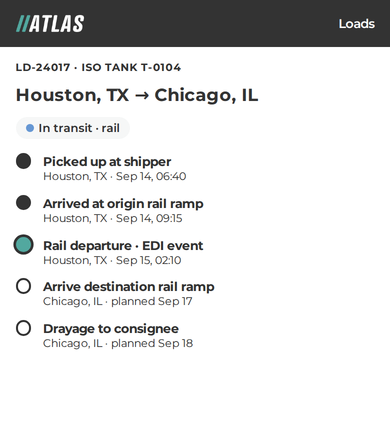
Operational context
A tank earns nothing while it waits
Between loads, a tank has to be found, cleaned to the right standard and matched to its next move. That work depends on accurate information about each tank.
Atlas tracks each tank as an asset, with its location, status and washout requirements attached, so your team can see what is available and what is holding a tank back.
Who uses Atlas at a tank operator
- Fleet and asset managers
- Operations and dispatch
- Depot and cleaning coordination
- Commercial and contract teams
Key challenges
What gets in the way today
Not knowing where every tank is
Tanks move between carriers, depots and customers, and their location is often known only to whoever has them.
Washout status that isn’t attached
When cleaning records live somewhere else, tanks can be held or sent to the wrong load.
Planning availability by guesswork
Without current status, committing tanks to upcoming moves relies on phone calls and spreadsheets.
Relevant Atlas workflows
How Atlas supports your fleet
-
Register each asset
ISO tanks and rail tank cars managed as assets in Atlas.
-
Track location
Telematics and railcar tracking feed each asset’s position.
-
Get alerted on events
Geofences notify you when tanks arrive or leave.
-
Record washout requirements
ISO tank washout requirements are recorded against the tank.
-
Assign tanks to loads
Each load shows the tank assigned to it as equipment.
Connected process
Where you sit in the move
Your tanks move through other parties’ hands. Atlas keeps their updates on the asset record.
- Shipper Needs a clean tank for the product.
- Logistics provider Plans the move and requests equipment.
- Tank operator You Asset location, status, washout and availability.
- Carriers Move the tank and report location events.
- Consignee Unloads and releases the tank.
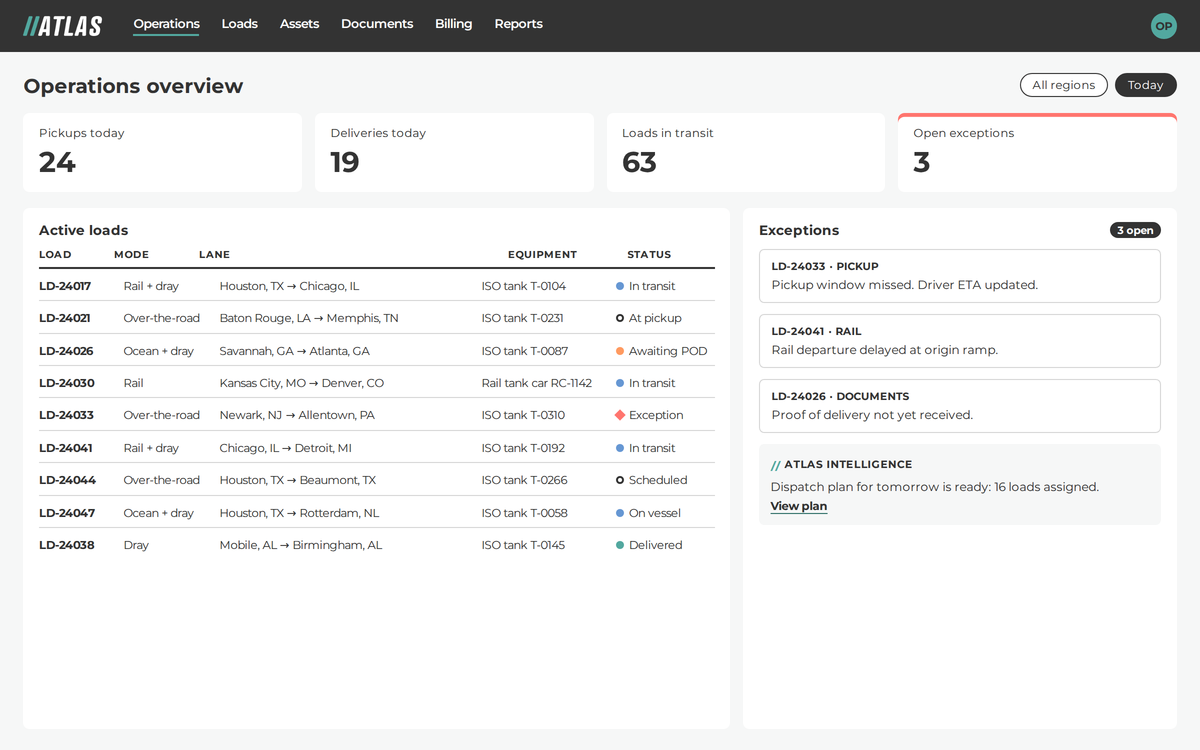
In the product
Asset status next to every load
-
Equipment on every row
Each active load shows the tank or rail tank car assigned to it.
-
Exceptions beside the list
Open exceptions across loads appear next to the active-load list.
-
Status on every row
Each load row shows its current status with a text label.
Relevant capabilities
Capabilities tank operators use most
Alerts and exceptions
- Geofences and notifications on location events.
- Exception management across loads and assets.
Security and operational trust
Location data from the sources you trust
Atlas brings in telematics data for trucks and chassis, railcar tracking for rail tank cars, and EDI events from rail, ocean and drayage partners, and attaches them to each asset.
Security, IT and procurement questions go directly to our team.
See how Atlas fits your operation.
Tell us about your fleet, depots and the moves your tanks support. We will tailor the conversation to how you manage assets.
Prefer to start with a question?
Ask about asset tracking sources, washout records or integrations before you book a demo.